Hypermobility & Physiotherapy
Improving strength, stability and confidence in movement
Are you naturally very flexible, but find that your joints sometimes feel unstable or painful? You may have joint hypermobility.
Hypermobility occurs when joints move through a greater range of motion than is typically expected. While some people experience no symptoms, others may develop joint pain, muscle fatigue, recurring injuries or difficulty with everyday activities.
What is hypermobility?
Joint hypermobility, sometimes referred to as being “double-jointed,” is characterized by increased movement at one or more joints. It can occur naturally or be associated with connective tissue conditions such as Hypermobility Spectrum Disorder (HSD) or hypermobile Ehlers-Danlos syndrome (hEDS).
Common symptoms may include:
Joint pain or discomfort, particularly after activity
A feeling of joint instability or looseness
Frequent sprains or strains
Muscle fatigue or tightness
Difficulty maintaining certain postures
Reduced balance or body awareness
Not everyone with hypermobility experiences pain. However, when increased joint mobility affects your ability to move comfortably or participate in activities, physiotherapy can be beneficial.
How can physiotherapy help?
Our joints rely on both connective tissues and surrounding muscles for stability. In people with hypermobility, the muscles may need to work harder to control joint movement, which can contribute to fatigue and discomfort.
Physiotherapy focuses on improving the strength and control needed to support your joints and manage your symptoms.
Treatment may include:
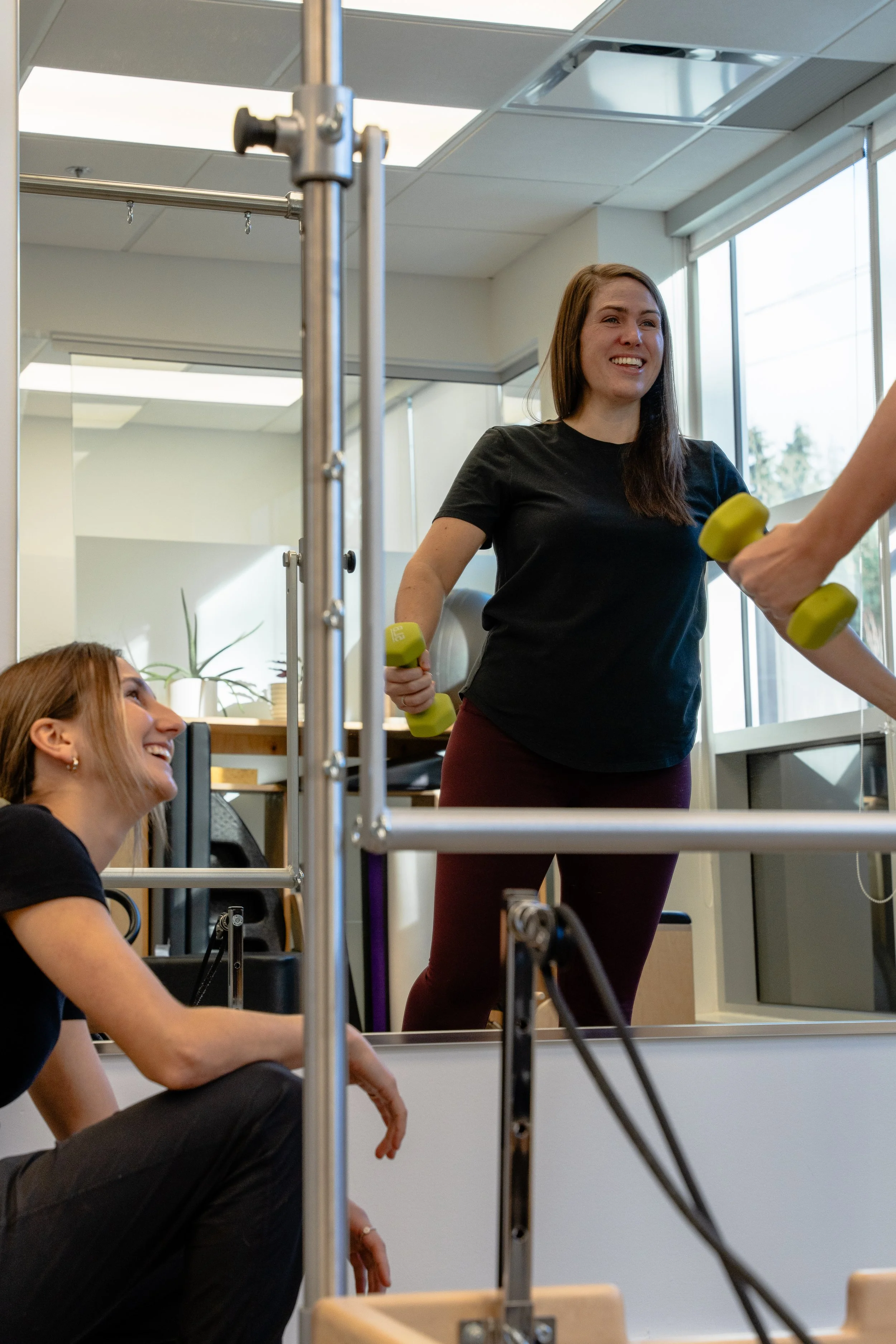
Strengthening and stability exercises: Improving the strength of the muscles surrounding your joints to provide better support during everyday activities.
Proprioception and movement control: Improving your body's awareness of joint position and helping you move with greater control and coordination.
Pain management: Addressing muscle tension, activity-related discomfort and contributing movement patterns.
Postural and functional training: Helping you move more comfortably during activities such as sitting, standing, lifting, walking and exercise.
Individualized exercise programming: Developing a progressive exercise plan that supports your goals while respecting your symptoms and recovery needs.
Is stretching recommended?
Although people with hypermobility may feel tight or stiff, additional stretching is not always beneficial. Muscle tightness can sometimes be related to fatigue or the body's attempt to stabilize a joint.
Rather than focusing on increasing flexibility, physiotherapy often emphasizes strength, stability and controlled movement. Stretching may still be appropriate in certain situations, but it should be guided by your individual needs.
Book an appointment at Ascend Physiotherapy to learn how we can help you move with greater strength, stability and confidence.